24K gold (999)
The metal is fine gold: 24 karats, marked 999 under the UK’s hallmarking rules.
Easily confused with
How to read it
The FTC’s jewelry guides treat 24 karat as fine gold: the word gold on its own, with no karat figure, should describe only metal that is fine (24 karat) gold throughout, including the surface layer of a coated product. The FTC’s consumer guide says pure gold is soft, which is why it is often mixed with other metals for jewelry. The UK’s Hallmarking Act lists 999 as its highest gold standard, struck as the figures 999, with 990 just below it.
Also searched as: 24K, 24 karat, 999 gold, fine gold.
A stamp is a claim about the metal, made by whoever struck it. This page says what each mark means under the rules that define it; it doesn’t test or value anything.
Gold with no number
In the FTC’s guides, the word gold with nothing in front of it is itself a claim of 24 karat. Anything less than fine gold throughout should carry a correct karat figure before the word gold, as conspicuous as the word itself. A plain GOLD stamp on a piece that is 14K is the kind of marking the guides list as misleading.
24K, 999 and 990
The Hallmarking Act has two standards above 22 carat: 990 and 999, both struck as their figures and both given the optional crown. The assay offices’ guidance notes list both among the gold finenesses recognised under the International Hallmarking Convention. The millesimal figure is the one that tells them apart.
How close to 24K the gold has to be
In the US, the Stamping Act lets gold fall short of its marked fineness by up to three parts per thousand, or seven for the whole article assayed with its solder. In the UK, the fineness mark means not less than the figure struck. The assay offices’ table allows solder of 750 in articles of 999 and 990 gold, and the 1998 amendment regulations changed the Act so that solder of not less than 750 is allowed in gold of 916.6 or above.
Plating is measured in 24-karat gold
The FTC’s thickness figures for gold electroplate (0.175 microns) and heavy gold electroplate (2.5 microns) are stated as the equivalent thickness of fine gold. The guides give the conversion: 1 micron of 12 karat gold is equivalent to one-half micron of 24-karat gold. A 24K plating mark therefore describes the plating, not the metal underneath.
24K or 24 carat?
Karat here is a measure of purity out of 24. The carat of a gemstone is a unit of weight, and the Hallmarking Act says the carat table for gold does not apply where the word is used as a measure of weight for precious stones.
Why 24?
The 24 parts go back to the old way of stating gold standards. Chaffers prints the 1649 record of the trial pieces made for the coinage, in which standard gold was 22 carats of fine gold and 2 carats of alloy in the pound troy: 24 carats in all, with fine gold as the full 24.
Fine gold bars and coins
The UK treats bullion differently from jewelry. The Hallmarking Act exempts raw material and bullion, including any bar, plate, sheet, foil, rod, wire, strip or tube, and any coin that is or was current coin of the UK or any other territory. A 999 stamp on a bar is not a hallmark. Gold articles under 1 gram are exempt from hallmarking too.
999 under the Convention
990 and 999 are both among the gold finenesses recognised under the International Hallmarking Convention, but neither is one of the five that the Convention says are legal in every member state. Members accept Convention-marked articles only in a fineness that is legal in the importing country.
Real examples
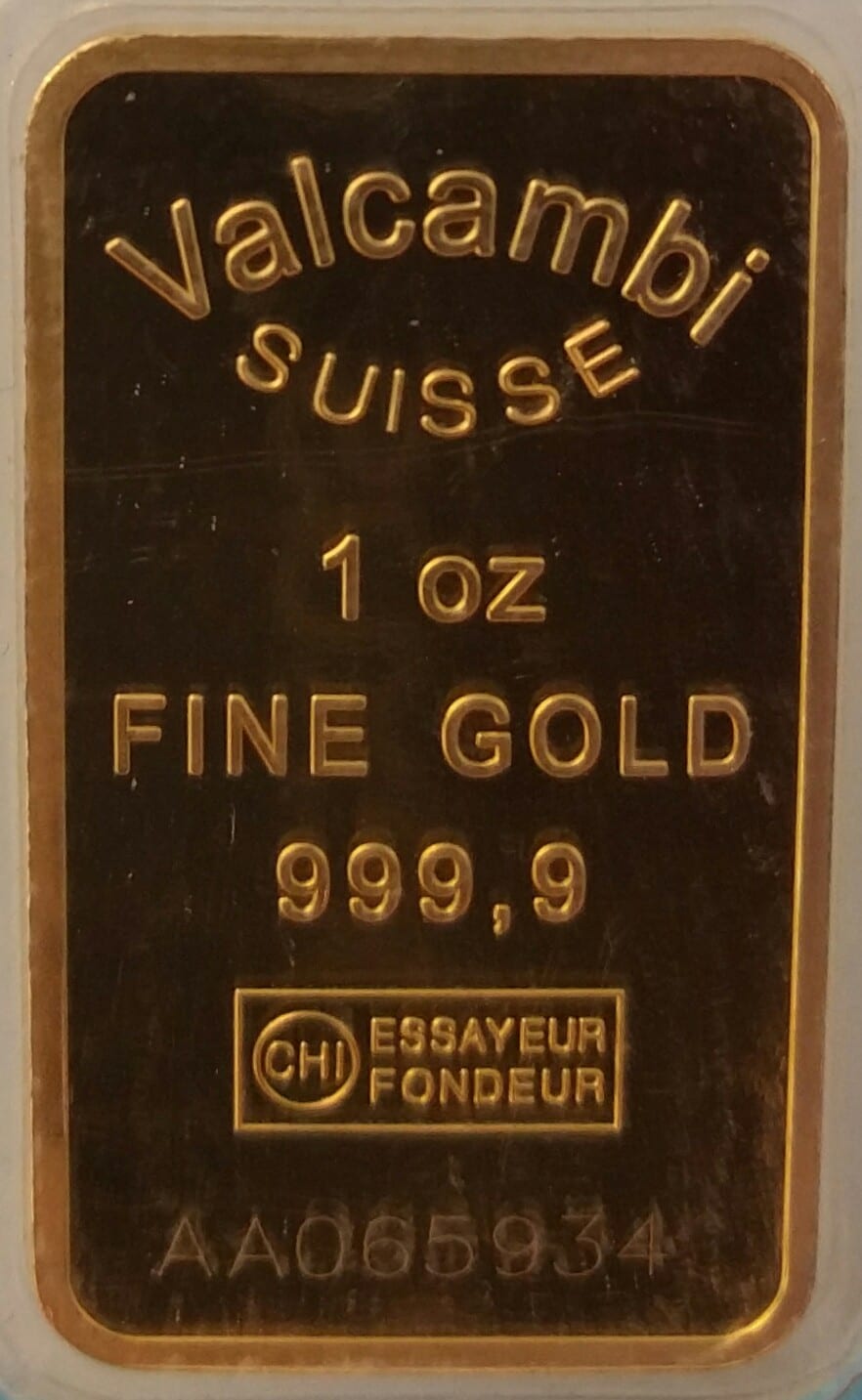
FINE GOLD 999,9 stamped on a one-ounce gold bar, with the assayer's mark belowPhoto: Nbarth, CC BY-SA 3.0, via Wikimedia Commons

Read next
- Next in Jewelry marksPT950 (platinum)The metal is platinum: at least 950 parts in every 1,000 are pure platinum.
- The same shape in AI labels and iconsAI iconAI-generated or AI-changed content. A badge with the letters AI, often in a circle or beside a word such as generated or modified, labels an image, video, sound or text as made or altered with artificial intelligence. The European Union publishes an official set of these icons.
More jewelry marks
The same shape elsewhere
Browse symbols drawn with circles or letters and numbers.
Sources
- Guides for the Jewelry, Precious Metals, and Pewter Industries (16 CFR Part 23), 16 CFR Part 23 (1 January 2021 edition), Federal Trade Commission, published by the U.S. Government Publishing Office, § 23.3(b)(1), (b)(2), (c)(3) n. 31
- Hallmarking Act 1973, Schedule 2: Approved Hallmarks, Hallmarking Act 1973 (c. 43), Sch. 2, legislation.gov.uk (The National Archives), Sch. 2, Pt. I, paras. 2 and 3
- Buying Platinum, Gold, and Silver Jewelry (FTC Consumer Advice), Buying Platinum, Gold, and Silver Jewelry, November 2024, Federal Trade Commission, Gold Jewelry
- Hallmarking Guidance Notes (UK Assay Offices, 2022), Hallmarking Guidance Notes: practical guidance in relation to the Hallmarking Act 1973, November 2022, The UK Assay Offices, published by the British Hallmarking Council on GOV.UK, pp. 3, 4, 6
- The Hallmarking (Hallmarking Act Amendment) Regulations 1998, S.I. 1998/2978, as made, legislation.gov.uk (The National Archives), reg. 2(9)
- Falsely Stamped Gold or Silver or Goods Manufactured Therefrom (15 U.S.C. chapter 8), 15 U.S.C. 291–300, the National Gold and Silver Stamping Act (2021 edition), U.S. Government Publishing Office, § 295
- Hallmarking Act 1973, Schedule 1, Hallmarking Act 1973 (c. 43), Sch. 1, Pt. III, legislation.gov.uk (The National Archives), Sch. 1, Pt. III, para. 2(2); Sch. 1, Pt. II, paras. 3 and 7
- Hall Marks on Gold & Silver Plate (Chaffers, 1922), William Chaffers, Hall Marks on Gold & Silver Plate, 1922 edition, Internet Archive (scan), 1649, trial of the Pyx
- How is the Convention working? (Hallmarking Convention), About: how is the Convention working?, Convention on the Control and Marking of Articles of Precious Metals, Standards of fineness
Researched, edited and approved by Rory Hansen before publishing. Last reviewed September 29, 2026. How we research
Added . Last updated .